
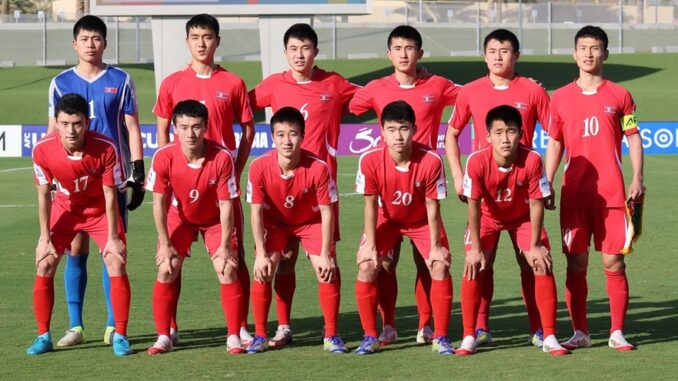
Hanoi, 25 April 2026 – The 2026 AFC U17 Asian Cup has seen a major late shake-up as North Korea U17 withdraws just before kickoff. Will Vietnam U17’s World Cup hopes be affected?
This decision has forced the Asian Football Confederation to revise the tournament plan and created several ripple effects in the race for qualification to the U17 World Cup 2026.
Group D—originally featuring North Korea, Uzbekistan, Australia, and India—now has only three teams. With time too limited, no replacement will be added, meaning teams in this group will play fewer matches than those in other groups.
Although not in the same group, Vietnam U17 will still be indirectly impacted. Coach Cristiano Roland’s side is in Group C alongside South Korea, UAE, and Yemen, but the overall qualification landscape could shift significantly.
Under the format, the eight quarter-finalists will qualify directly for the U17 World Cup 2026. Additionally, if host nation Qatar advances from the group stage, an extra spot may be awarded to the best third-placed team.
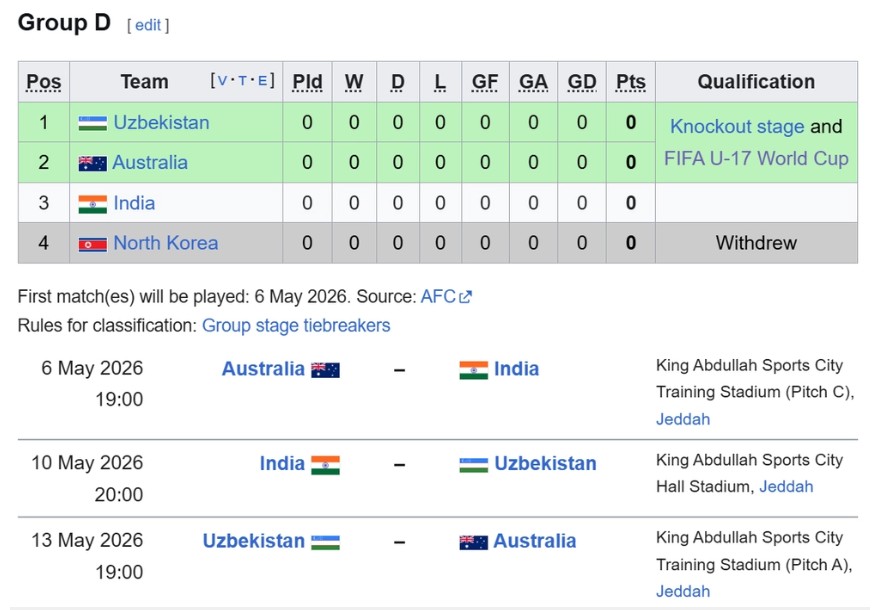
This is where the withdrawal creates complications. With one group reduced to three teams, the AFC is likely to adjust the ranking method for third-placed teams—possibly excluding results against the bottom team to ensure fairness. This could disadvantage teams in full four-team groups, including Vietnam, by reducing their potential points or goal difference advantage.
In other words, if Vietnam fails to reach the quarter-finals and must compete for a “best third-place” slot, their chances of qualifying for the World Cup could become more uncertain due to these structural changes.
According to FIFA, Asia has nine slots for the U17 World Cup 2026 (including host Qatar). As a result, even small adjustments to the format can have a major impact on qualification scenarios.
With North Korea’s withdrawal, the tournament becomes more unpredictable, and Vietnam U17 will need to rely on their own performance rather than external factors to secure a place at the World Cup.
VSN/RPT
Leave a Reply