

Kuala Lumpur, 11 June, 2025 – Vietnam’s 0-4 loss to Malaysia in the second round of the 2027 AFC Asian Cup qualifiers stunned many supporters. But for those closely following the match’s dynamics, the result, though heavy, was not entirely surprising—it was the culmination of mounting weaknesses and Malaysia’s unprecedented transformation.
Before this clash, Malaysia had endured 11 painful years without a win against Vietnam. The “Golden Stars” had consistently thwarted the Harimau Malaya’s ambitions, including a triumphant AFF Cup 2024 campaign that added salt to Malaysia’s wounds. Historically, Vietnam—not Thailand—has been Malaysia’s true regional nemesis.
Determined to rewrite that narrative, Malaysia entered the June 10 showdown at Bukit Jalil Stadium with fierce intent. Coach Peter Cklamovski fielded a starting lineup featuring 9 naturalized players—drawn from top footballing backgrounds in Finland, Spain, Brazil, and Argentina. While Malaysia had used foreign-born players in the past, this generation stood out in both quality and composure, especially compared to regional standards.
With superior physique, fitness, and international experience, Malaysia immediately imposed their game. Vietnam, meanwhile, was plagued by a severely depleted squad. Only the brilliance of goalkeeper Filip Nguyen kept the hosts from scoring multiple times in the first half, making spectacular saves from Dion Cools, Jon Irazabal, and Arif Aiman.
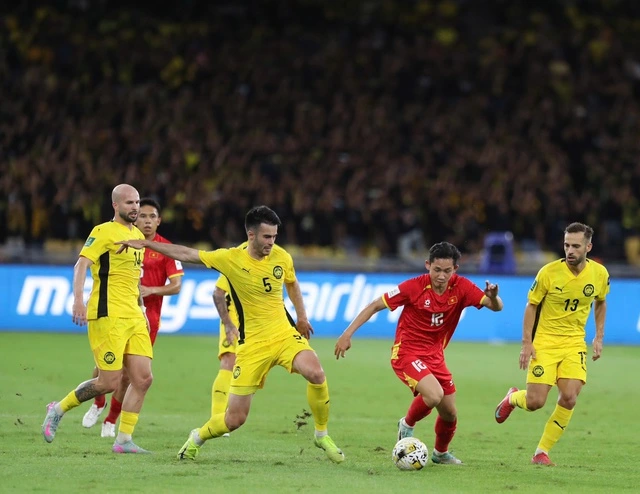
But the inevitable came in the second half. Vietnam’s physical decline and defensive injuries opened up gaps Malaysia was quick to exploit. João Figueiredo struck first in the 49th minute after a midfield error. Rodrigo Holgado doubled the lead in the 59th with a clinical finish, followed by La’Vere Corbin-Ong’s close-range effort in the 67th. Dion Cools capped off the win with a header in the 88th minute, sealing Malaysia’s most dominant win over Vietnam in history.
The goals reflected a fusion of South American flair and European tactical discipline—Malaysia’s evolving identity under Cklamovski. They not only ended an 11-year drought but also delivered a powerful statement in their campaign to reach the Asian Cup finals.
While playing away at Bukit Jalil is always a challenge, especially with a weakened squad, few expected such a lifeless performance from Vietnam. Coach Kim Sang Sik’s side struggled throughout the match to build meaningful attacks or apply pressure. Only when trailing by four and as Malaysia slowed the tempo with substitutions did Vietnam find some breathing room, leading to brief flashes from Tuan Hai, Tien Linh, and Quang Hai.

The absence of Xuan Son was clearly felt, with Vietnam’s attack lacking a physical and creative edge. In midfield, Hoang Duc worked hard and Minh Khoa contributed modestly, but overall, the team lacked bite in duels and struggled to produce incisive passes. The defense fared no better. Debutant Quang Vinh showed heart but was frequently exposed, becoming a key target for Malaysia’s attack. The sole standout was Filip Nguyen, whose heroics prevented an even more humiliating scoreline—potentially a “tennis set” defeat.
When the goalkeeper is your best performer, it signals deeper structural issues. Coach Kim Sang Sik now faces the urgent task of re-evaluating Vietnam’s approach and finding a tactical solution to Malaysia’s naturalized-powered resurgence. Unless significant changes are made and a decisive response is delivered in the return leg in March 2026, Vietnam may be watching the 2027 Asian Cup from home.
This isn’t just a loss—it’s a wake-up call.
Dang Long
Leave a Reply